Search the site...

OPTIMISTIC DISCONTENT
  • Home
  • Curriculum
    • Curriculum Framework
    • Unit Design >
      • Standards >
        • National Visual Arts Standards
        • New! Missouri Visual Arts Learning Standards
      • Unit & Priority Standards
      • Enduring Understandings
      • Unit Themes
      • Essential Questions >
        • EQ Examples: Overarching
        • EQ Examples: Topical
    • Assessment Design >
      • Scoring Guides
      • Proficiency Scales
    • Lesson Design >
      • Inquiry-based Lesson Design
      • Teaching through Inquiry in Art
      • Inquiry-based Lesson Structure
    • Unit Examples >
      • Elementary Units
      • Middle School Units
      • High School Units
    • Resources
  • Presentations
    • Speaker Request Form
  • About
    • Thought Blog
    • More about Michelle
  • Contact
  • Community
  • Home
  • Curriculum
    • Curriculum Framework
    • Unit Design >
      • Standards >
        • National Visual Arts Standards
        • New! Missouri Visual Arts Learning Standards
      • Unit & Priority Standards
      • Enduring Understandings
      • Unit Themes
      • Essential Questions >
        • EQ Examples: Overarching
        • EQ Examples: Topical
    • Assessment Design >
      • Scoring Guides
      • Proficiency Scales
    • Lesson Design >
      • Inquiry-based Lesson Design
      • Teaching through Inquiry in Art
      • Inquiry-based Lesson Structure
    • Unit Examples >
      • Elementary Units
      • Middle School Units
      • High School Units
    • Resources
  • Presentations
    • Speaker Request Form
  • About
    • Thought Blog
    • More about Michelle
  • Contact
  • Community

YardSticks

5
6
7
8
9
10
11

Picture

Age 7 Takeaways

Incoming 2nd graders are typically seven years old, each progressing through a range of characteristics that should be considered. When thinking about 2nd grade lessons, keep in mind the typical abilities and characteristics of not only seven year olds, but how those needs change as they transition to eight.
Favorite Themes for children this age:
  • ​Our Neighborhood
  • How systems work (plumbing, lighting, heating in our school; how we get our milk; how the cafeteria works)
  • Jobs people do 
  • Things we are good at
  • Natural science topics (pond, forest, meadow, etc.)
  • Cultural and racial diversity and discrimination
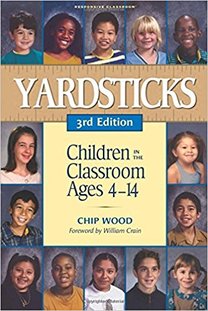
Yardsticks is a fantastic resource that offers age-by-age characteristics of typical child development. These general indicators are helpful to be aware of as you develop curriculum and help children grow. I have included characteristics that I find helpful when thinking specifically about art curriculum, but there is much more included for each age. I highly recommend reading the entire book.​

Drawing on decades of educational experience and a wealth of research, Yardsticks invites every adult who teaches or cares for children to celebrate the incredible developmental journey that occurs from ages four through fourteen. Combining easy-to-access information about the cognitive, social-emotional, and physical characteristics unique to each age with practical advice for how to apply this knowledge, Yardsticks offers parents and educators a foundation for helping children grow and thrive.
Cognitive Growth:
Seven Year-Olds Growth Patterns -
  • Enjoy repeating tasks and reviewing learning
  • Like to work by themselves slowly and finish what they start
  • Bothered by mistakes and try hard to make their work perfect
  • Good at classifying - sorting buttons, pictures, leaves, shapes, etc.
  • Like to be read to
  • Enjoy board games as well as computer games
  • Enjoy hands-on exploration - taking things apart and discovering how they work
  • Increasingly able to reflect on their learning
In the Classroom - 
  • Need a classroom environment suitable for sustained, quiet work periods
  • Because of their strong need for routine and closure, need time to finish their work; appreciate a "heads-up" that it's time to prepare for transitions
  • Like to work by themselves or in two's
  • Comfortable with emphasis on high-quality products and proper display of work
  • Like to repeat tasks
  • Like to review learning verbally or frequently touch base in other ways with their teacher
  • Enjoy inquiry activities; often work well in "discovery" centers; like to collect and sort
Proudly powered by Weebly